I did today’s D-Day Tour with Overlord Tour. Great Company.Oliver was our tour guide. He is Dutch and was a middle school English teacher for seven years. He got tired of teaching and now he is a tour guide. He is so knowledgeable and made the tour a memorable experience.
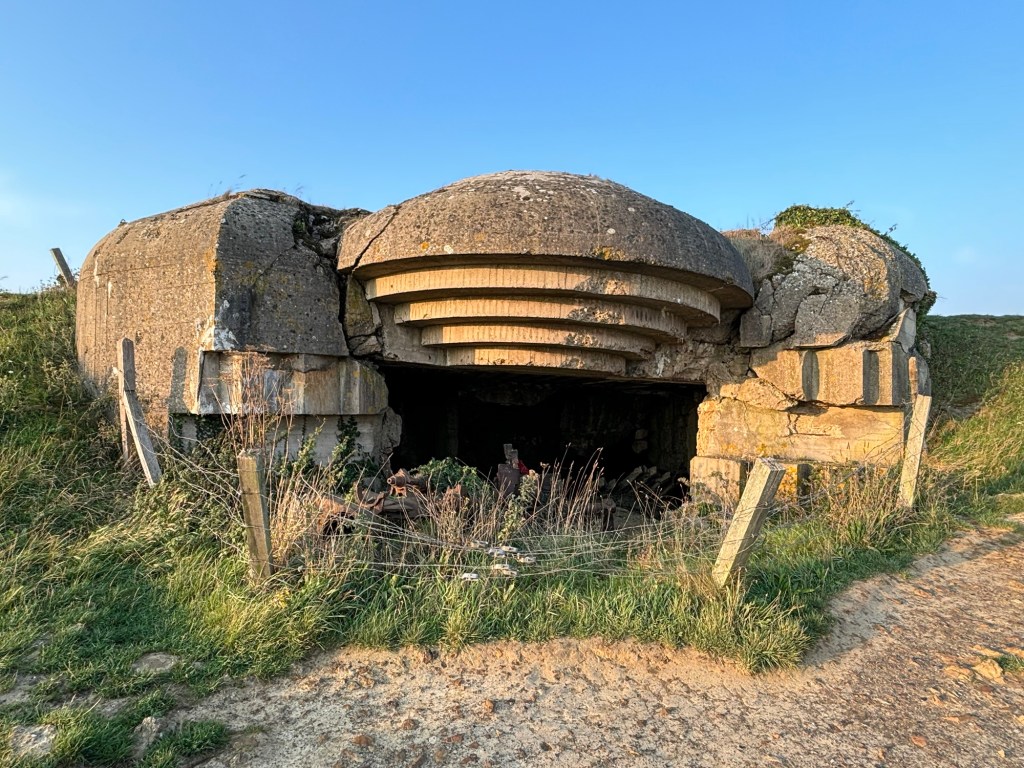
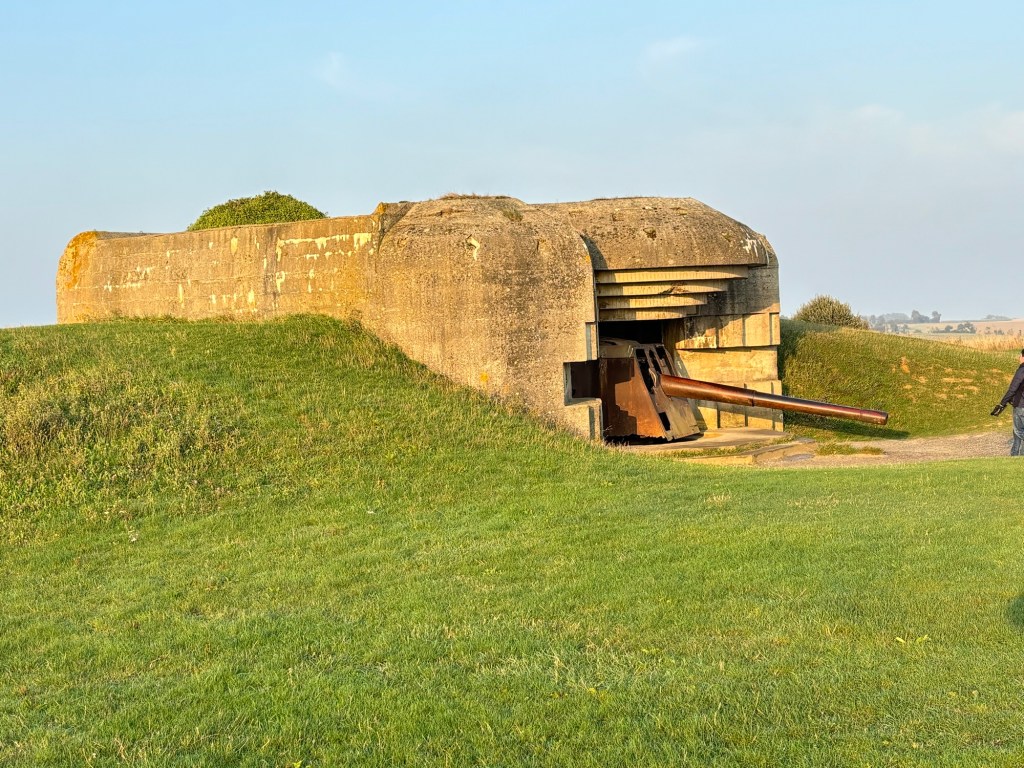
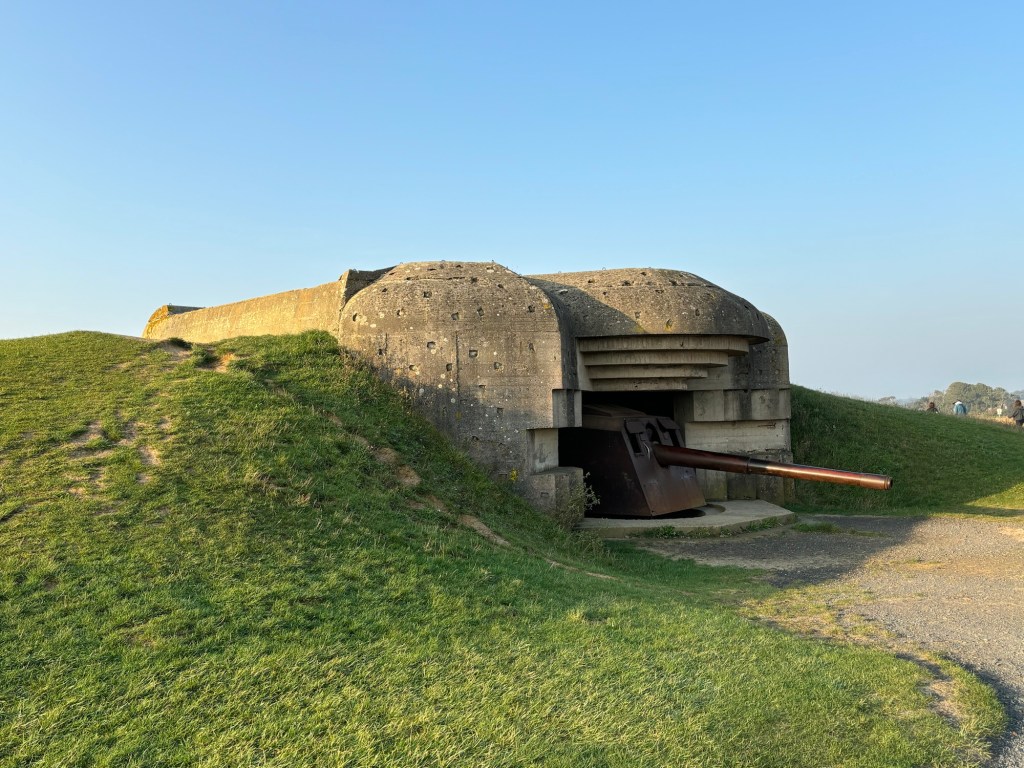
Our first stop was a grouping of four guns overlooking Gold Beach.
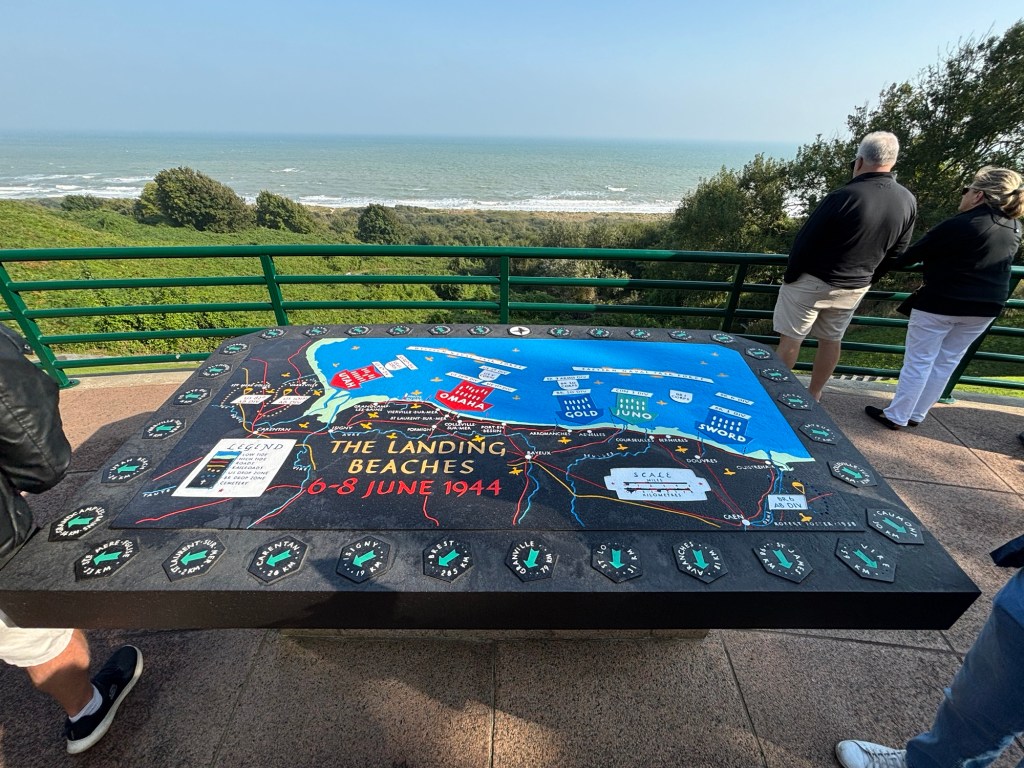
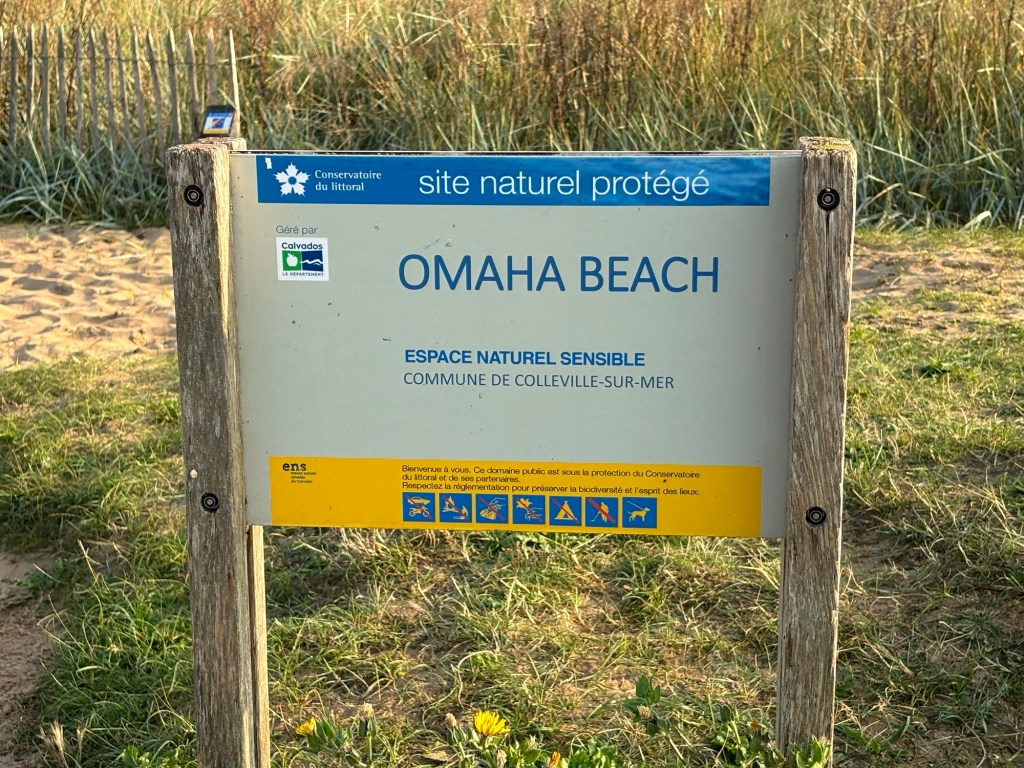
If you are on one of the invasion ships approaching the Normandy coast, scanning from your right to your left, you would see the following invasion beaches: Utah, Omaha, Gold, Juno and Sword.This is the first casemate we visited in the four gun battery. The gun in this battery could cover Gold beach in front of it and it could also swivel to the left and cover Omaha Beach and to the right and cover Juno Beach.This is the second casement. After British soldiers captured it they decided to take a break and brew up a pot of tea. Their stove fell over and ignited the shells in the casemate blowing off the top of the casemate and killing the soldiers.This is the third casemate. The concrete used to build these casemates was not as strong as it should have been. The slave or conscripted laborers who built these casemates scrimped on the cement and loaded up on the sand when they mixed the concrete.This is the fourth casemate. In the hours before the first troops landed on Gold Beach this area was shelled by an armada of warships. No significant damage was done to the guns or the casemates. However, the shelling cut the telephone wires from the casemates to the fire control bunker so the guns could not be aimed accurately. This gun battery fired a total of 110 shells and did no damage before the German soldiers abandoned them.Our next stop was Omaha Beach.This is a marker in the surf memorializing the D-Day landing.
On the hills overlooking Omaha Beach the Germans had placed 85 machine guns each one capable of shooting 1200 bullets a minute. In addition the Germans installed cannons, mortars and flame throwers. The first three waves of American troops who assaulted this beach suffered over 90% casualties. The water and air temperature was hovering around 50 degrees. The soldiers were carrying packs that weighed 70 pounds dry. They had to wade through chest deep water for 200 yards before they were on the beach. I have no idea how these young men did what they did. I was moved almost to tears being on Omaha Beach while our guide described the horror of the assault.
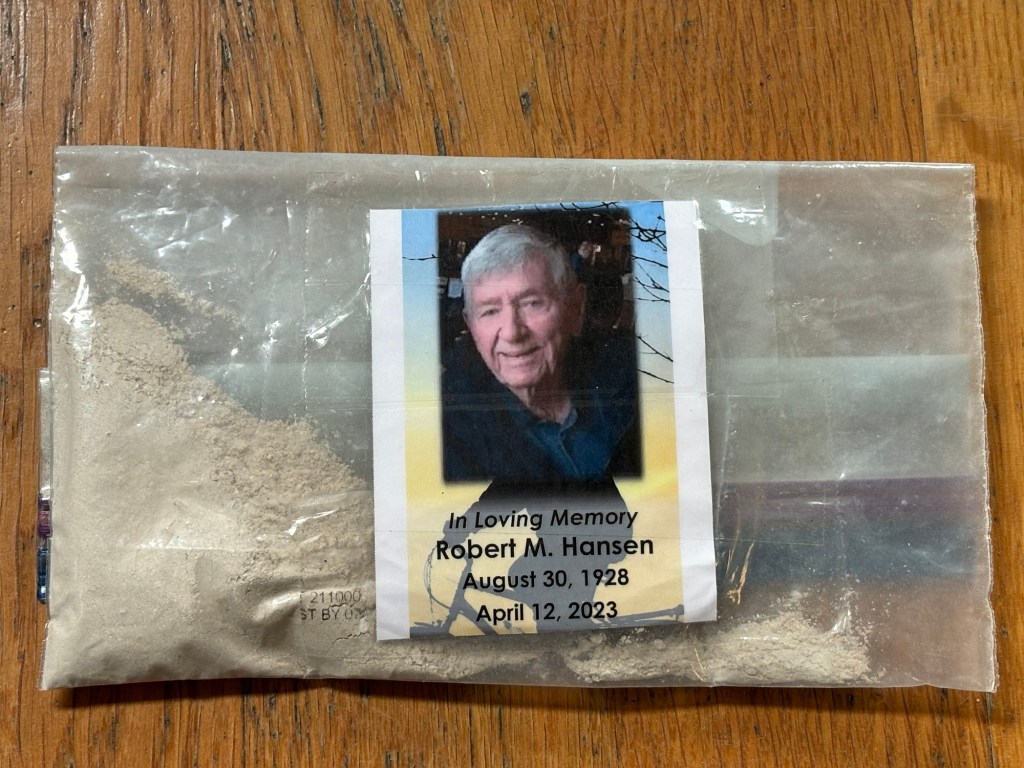
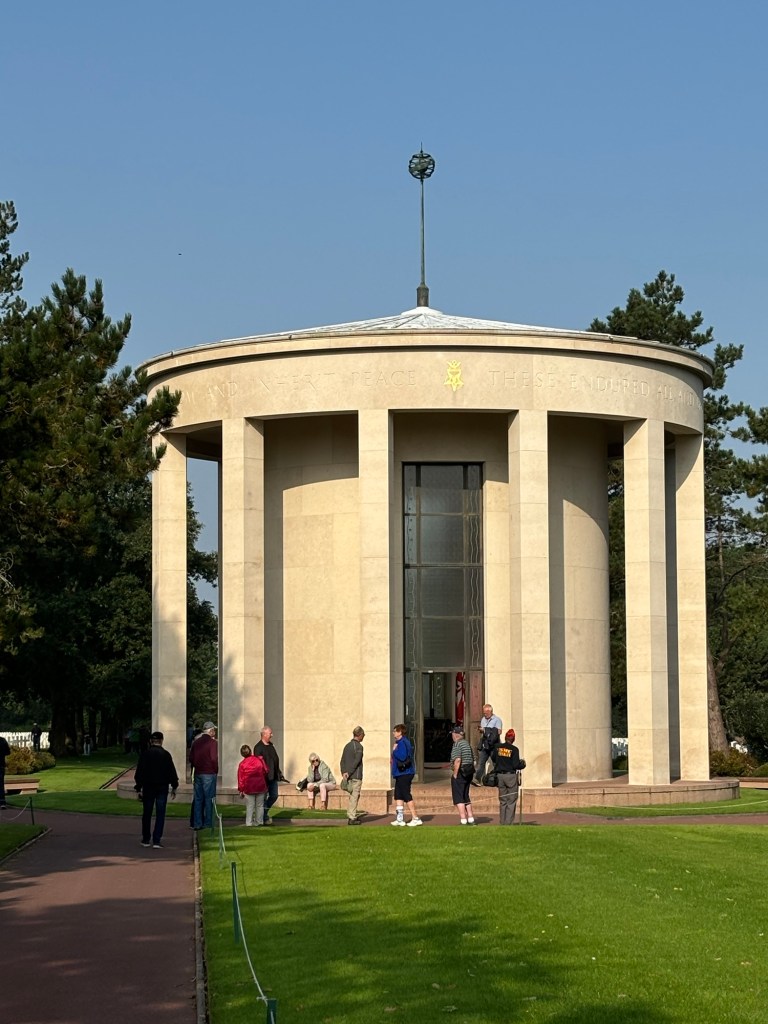
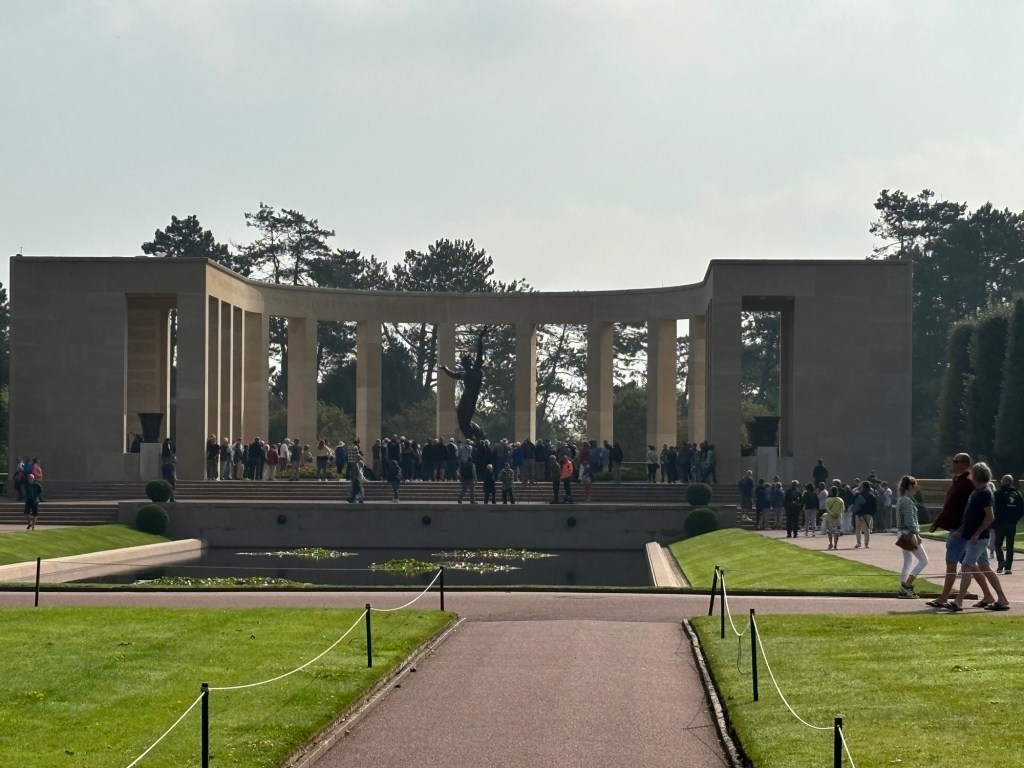
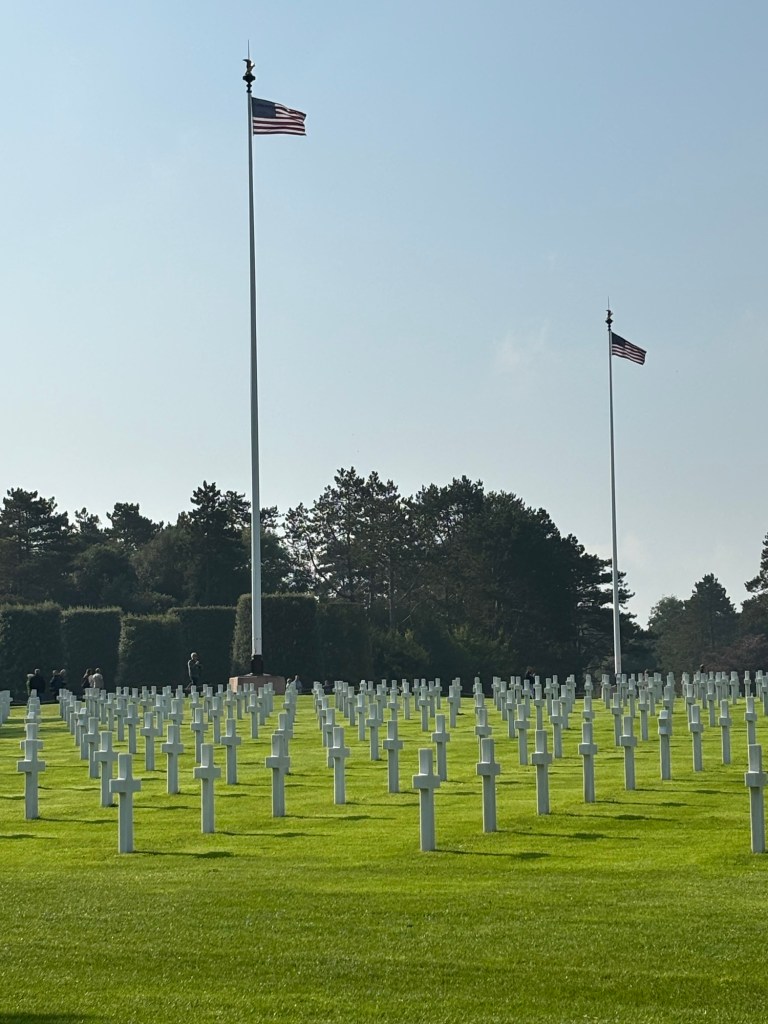
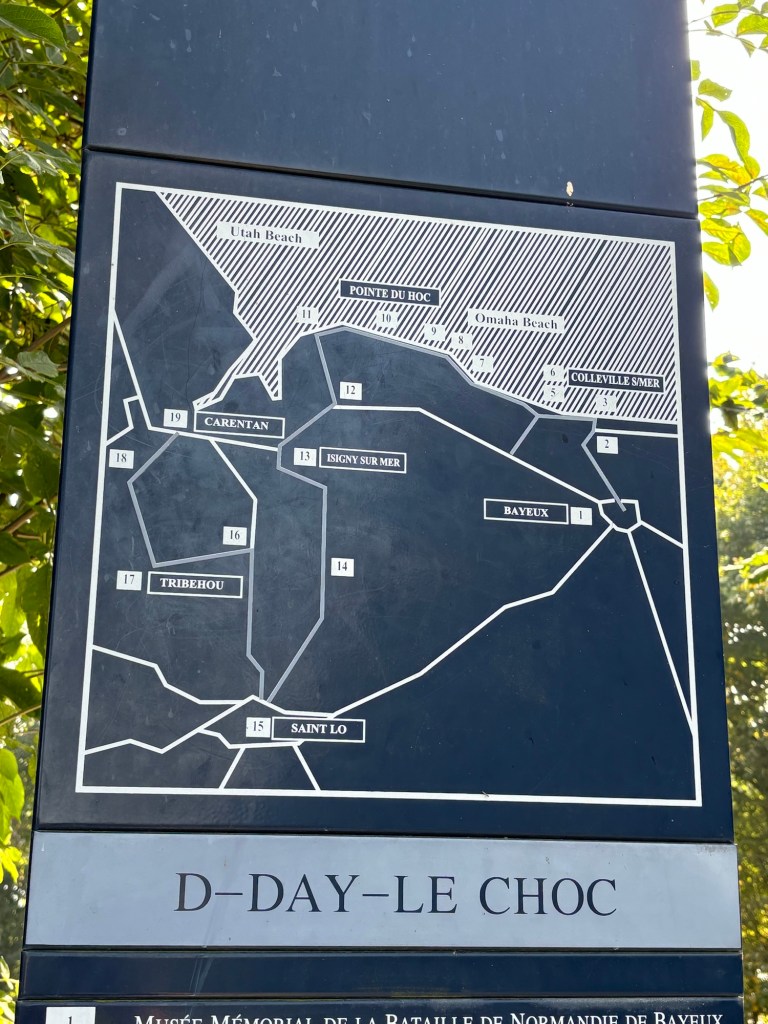
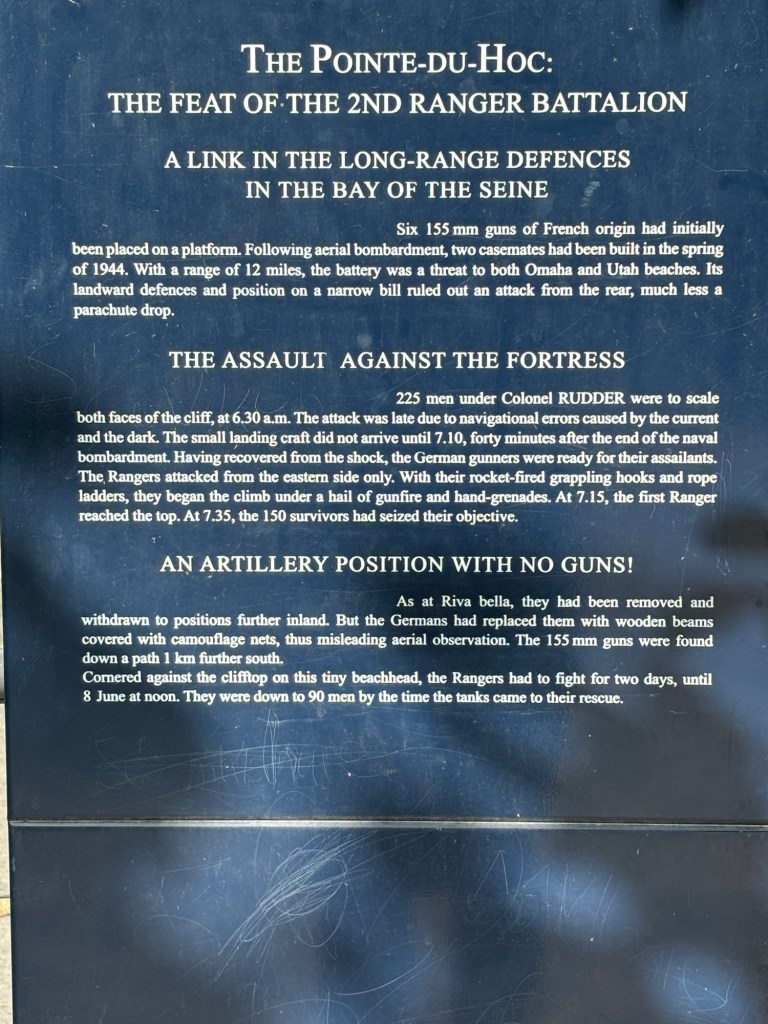
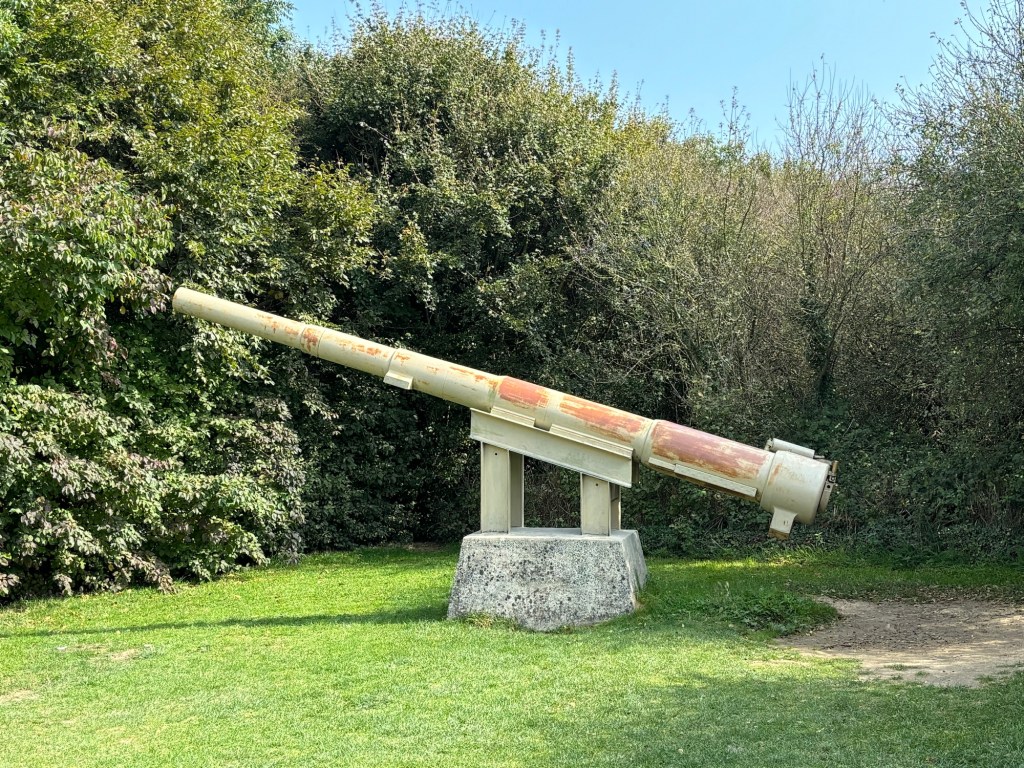
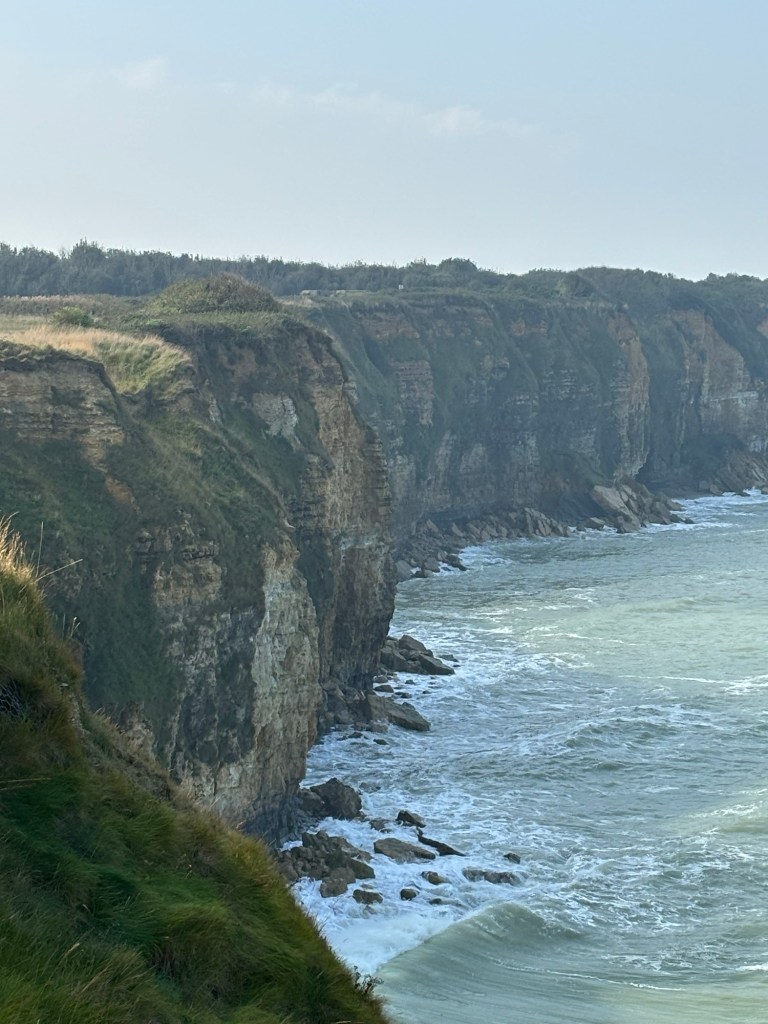
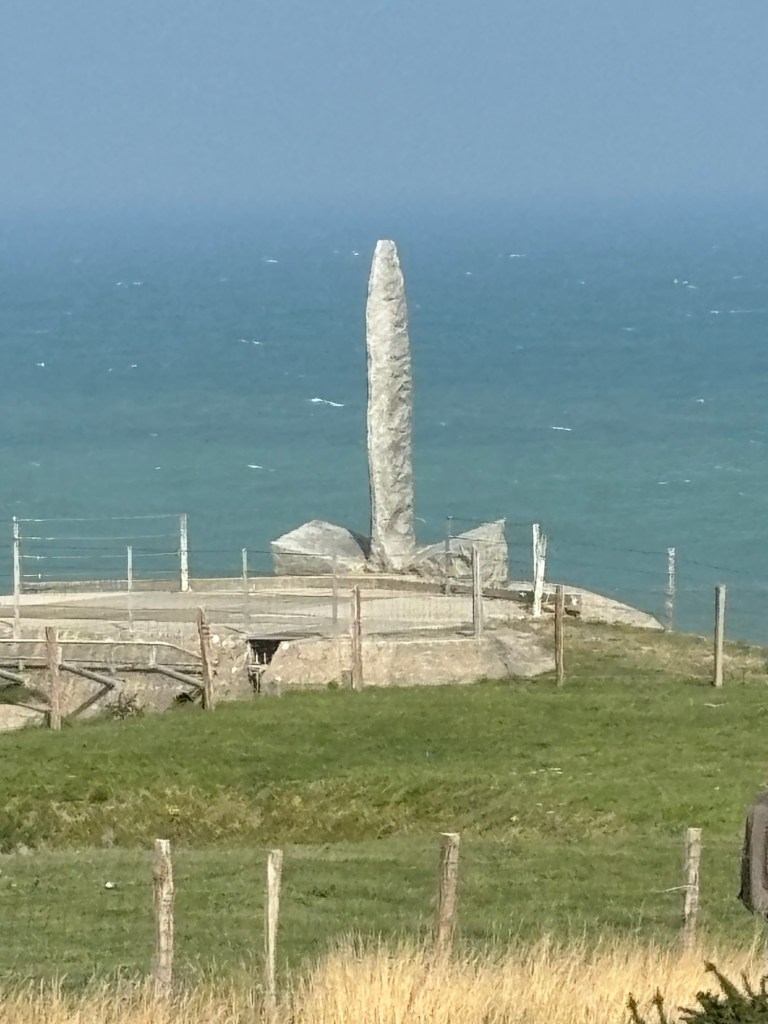
My Father goes with me when I travel overseas. He was a combat veteran in the Korean War and was awarded two bronze stars for his service in Korea. I spread some of his ashes on Omaha Beach. Our next stop was the American Cemetery. Nine thousand three hundred and eighty-nine American soldiers who were killed in the Battle of Normandy are buried here.This is the chapel.This is the altar in the chapel.Inscription on the altar.This is a memorial plaza. As I was walking toward this memorial a bugler started playing taps. Everyone in the Cemetery stopped, turned toward the memorial and stood in silence until the bugler blew his last note.This truly is hallowed ground.After the Cemetery we went to Pointe du Hoc.This is a good summary of what happened at Pointe du Hoc.One of the German guns.The Rangers scaled 100 foot cliffs to get to the top only to find that the Germans had moved the six big guns guns and replaced them with telephone poles to fool the Allies into thinking the guns were still there. The Rangers started out the assualt with 225 men and within 30 minutes they were down to 125 men. After three days of fighting they were down to 80.The Ranger Memorial on Pointe du Hoc.
After Pointe du Hoc we stopped for lunch.
This was our lunch spot.Hamburger, fries and a glass of cider.
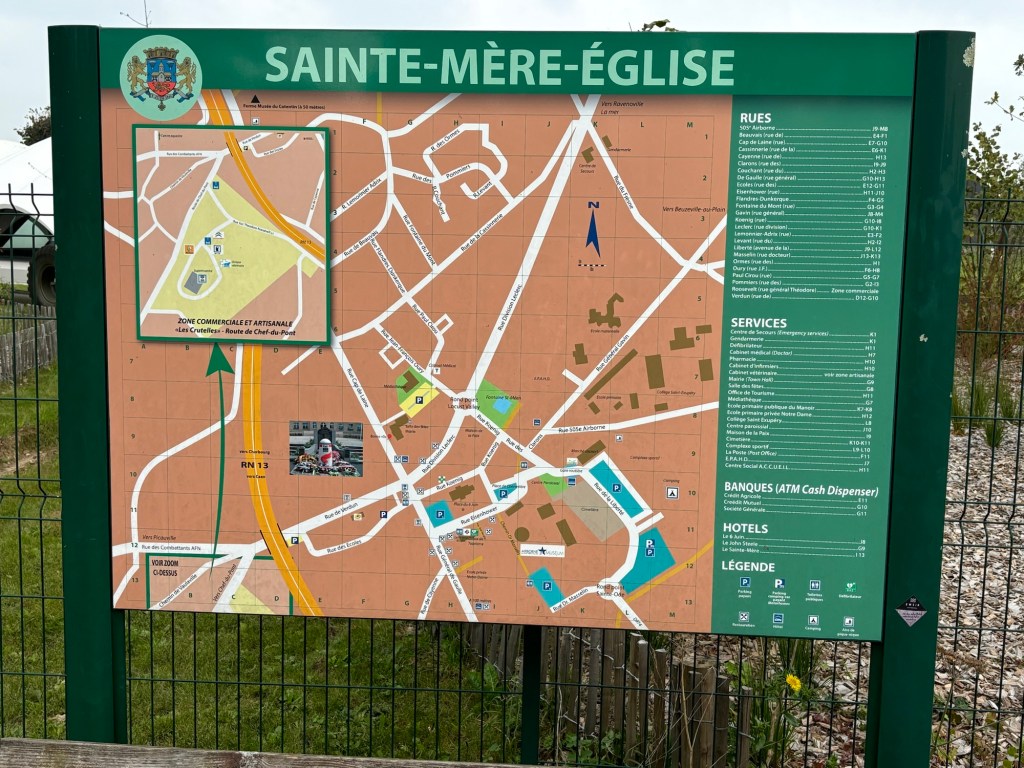
After lunch we visited Sainte Mere Eglise. This was the scene of a major American paratroop drop and subsequent battle.
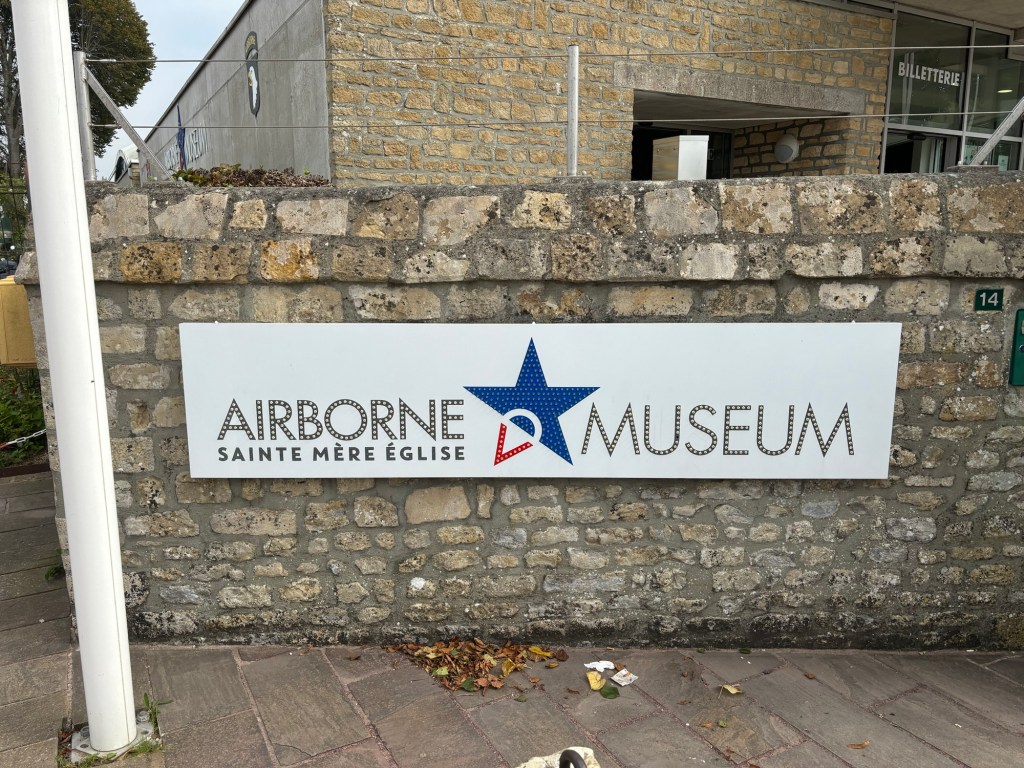
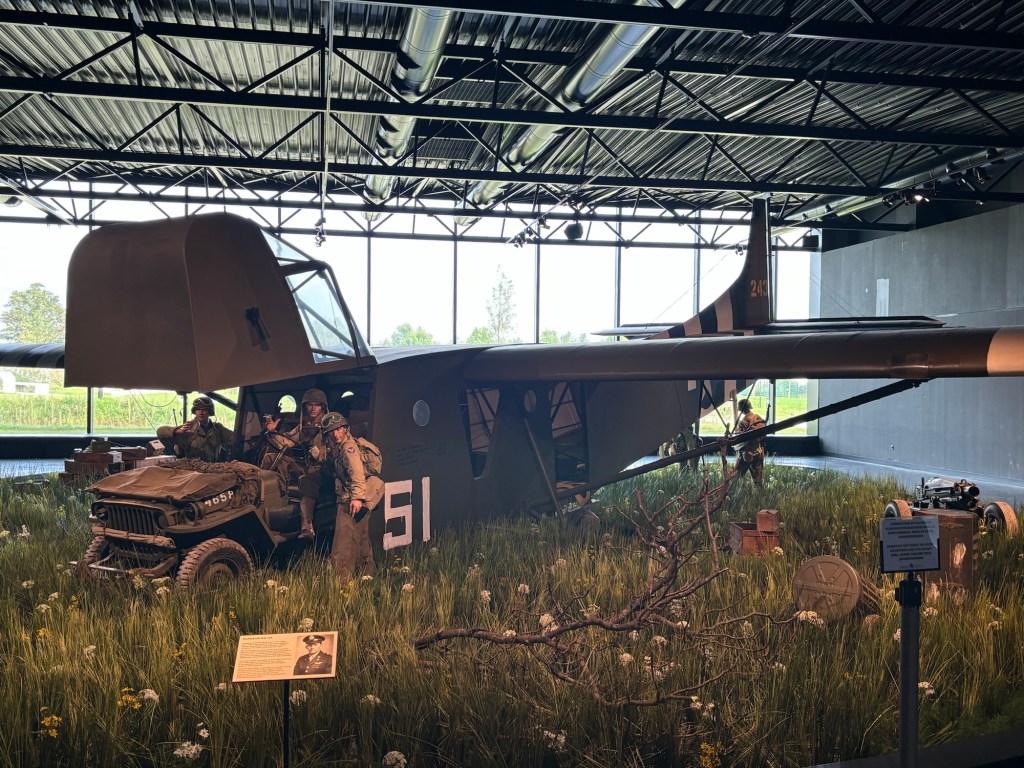
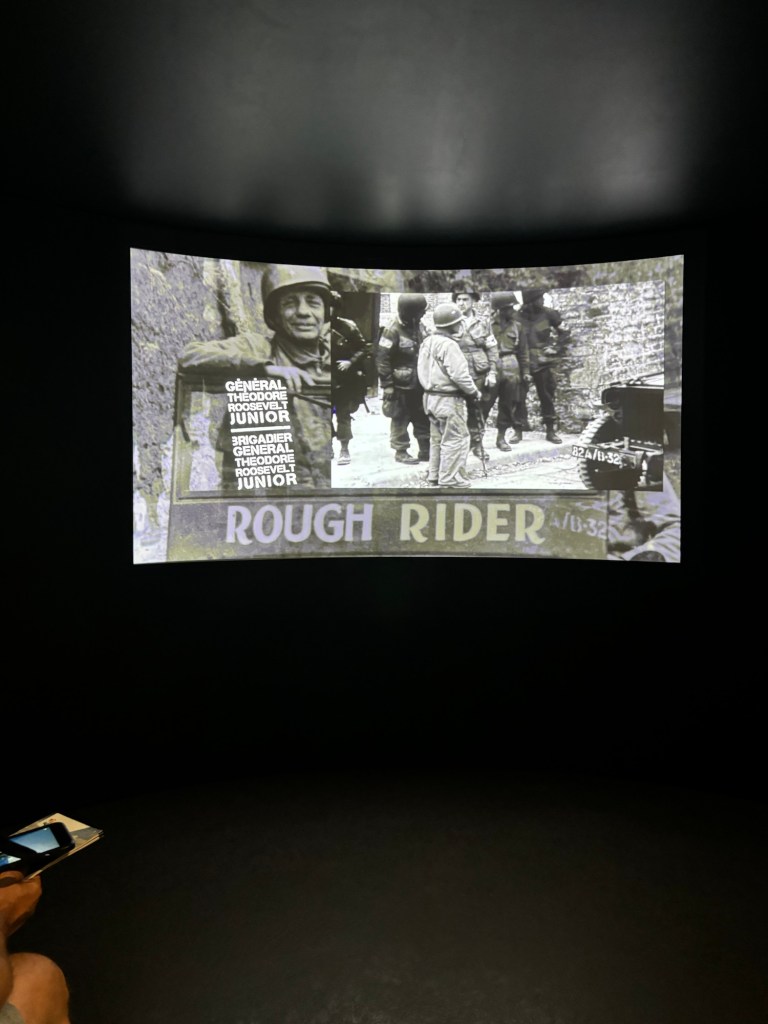
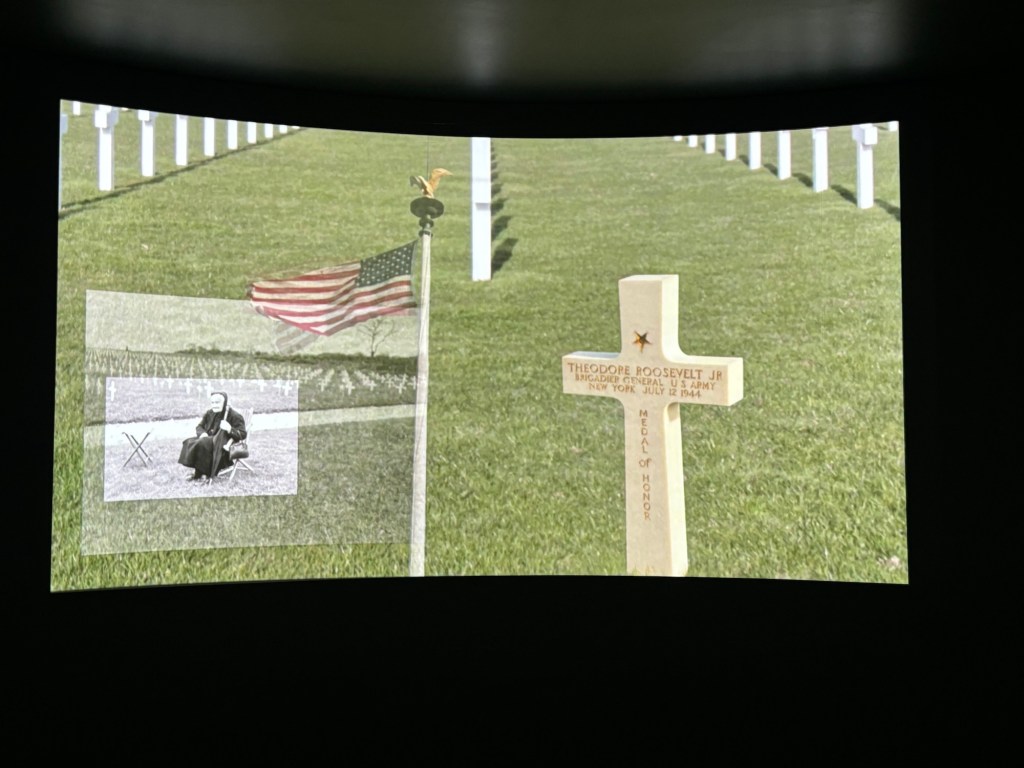
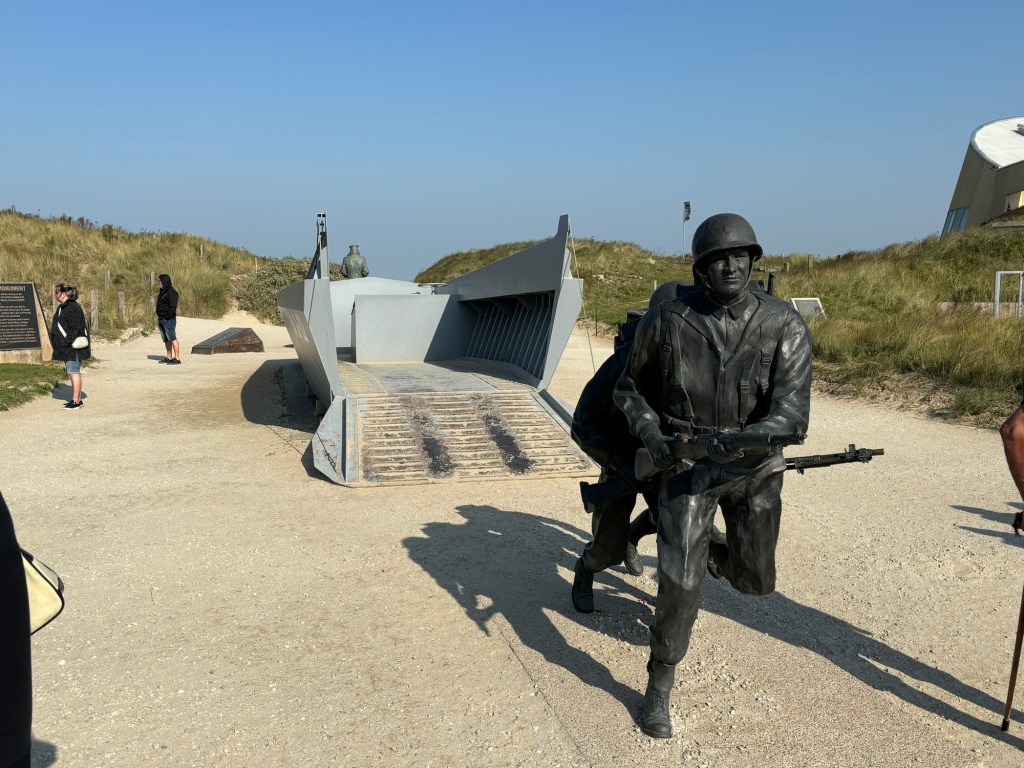
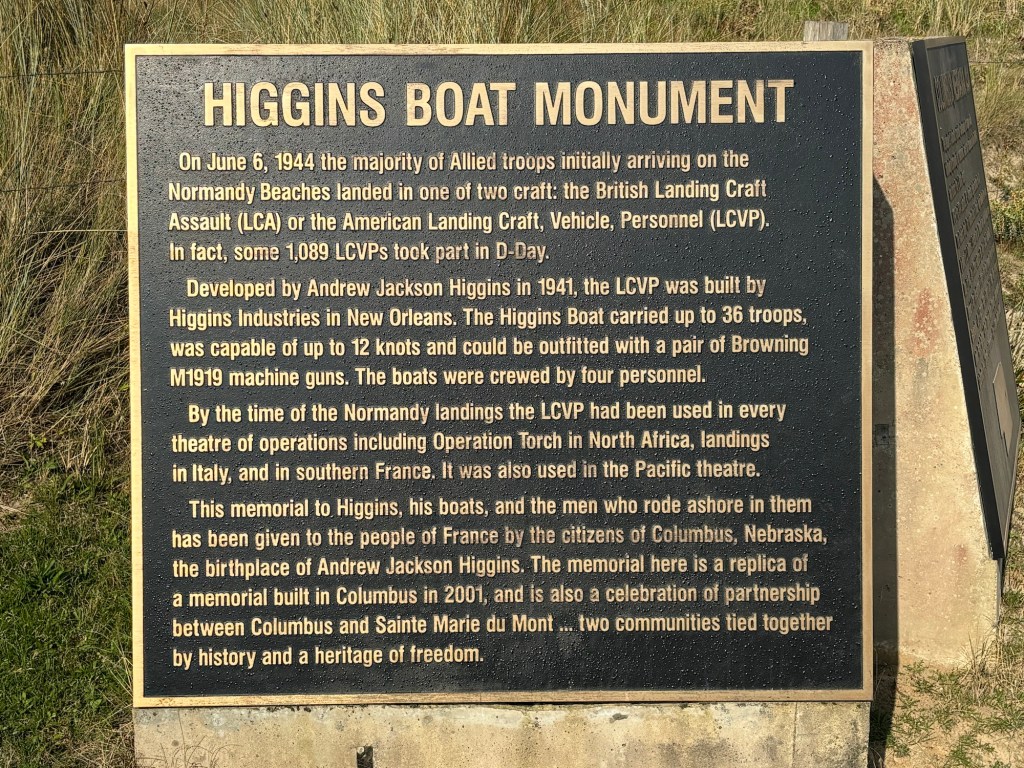
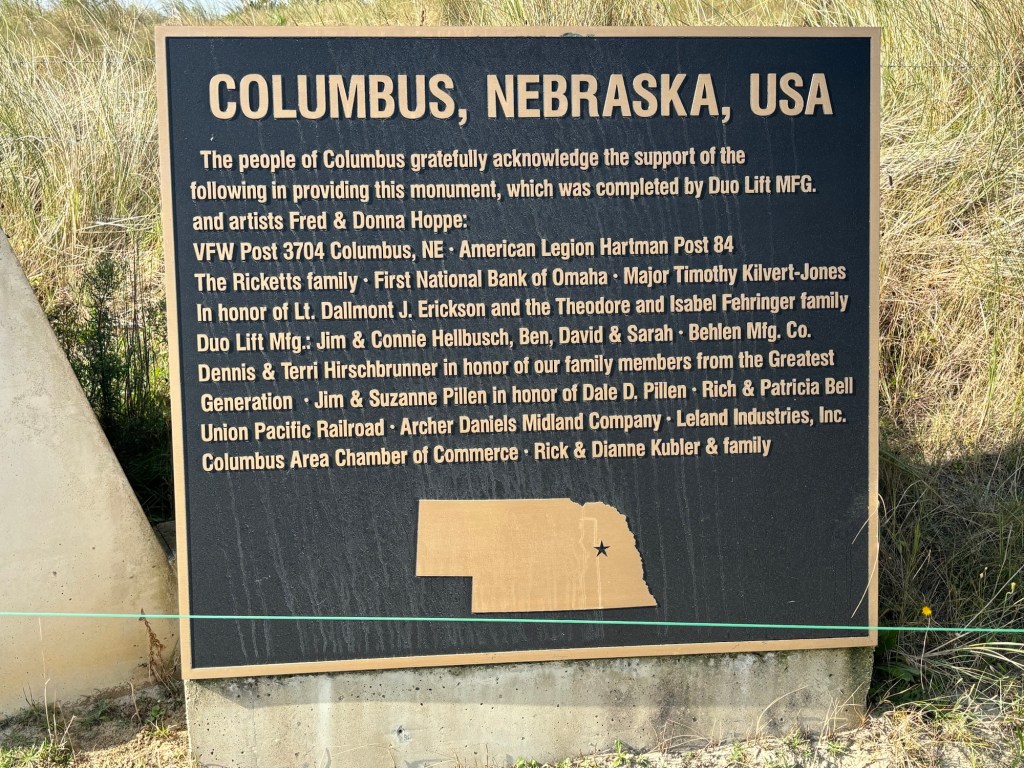
The D-Day sites are very well marked and explained.This is the famous church steeple where a paratrooper was hanging by his parachute for hours watching the battle rage below him.We spent some time in the Airborne Museum at Sainte Mere Eglise. Twenty three thousand paratroopers jumped on D-Day.This is a glider that is in the Museum.Next it was on to Utah Beach. Everything that could go wrong did go wrong on Omaha Beach. Everything went according to plan on Utah Beach.Teddy Roosevelt Jr. led his men ashore on Utah Beach. The youngest soldier who landed on D-Day was a seventeen year old private who lied about his age when he enlisted. The oldest was General Teddy Roosevelt Jr. who was 56.Teddy Roosevelt Jr. was awarded the Medal of Honor for leading his men ashore on Utah Beach and died of a heart attack two weeks later.Higgins boat memorial on Utah Beach.Another shot of the Higgins boat memorial.Nice shoutout to Andrew Jackson Higgins.Columbus, Nebraska was the driving force behind this memorial.Our next stop was a small church where two medics set up a field hospital and for two days tended to 93 wounded paratroopers while surrounded by German soldiers.Our final stop was the German Cemetery. This hill is where they buried the German soldiers they could not identify.Twenty-one thousand German soldiers who died in the fighting in Normandy are buried here.
That’s it from Bayeux. I hope you are having a great day wherever you are.
I've been retired from the Union Pacific Railroad since 2017. I've been planning to walk the Camino for about 6 months and can't wait to get started.
View all posts by abeandmarkonthecamino















 AbeAndMarkontheCamino